


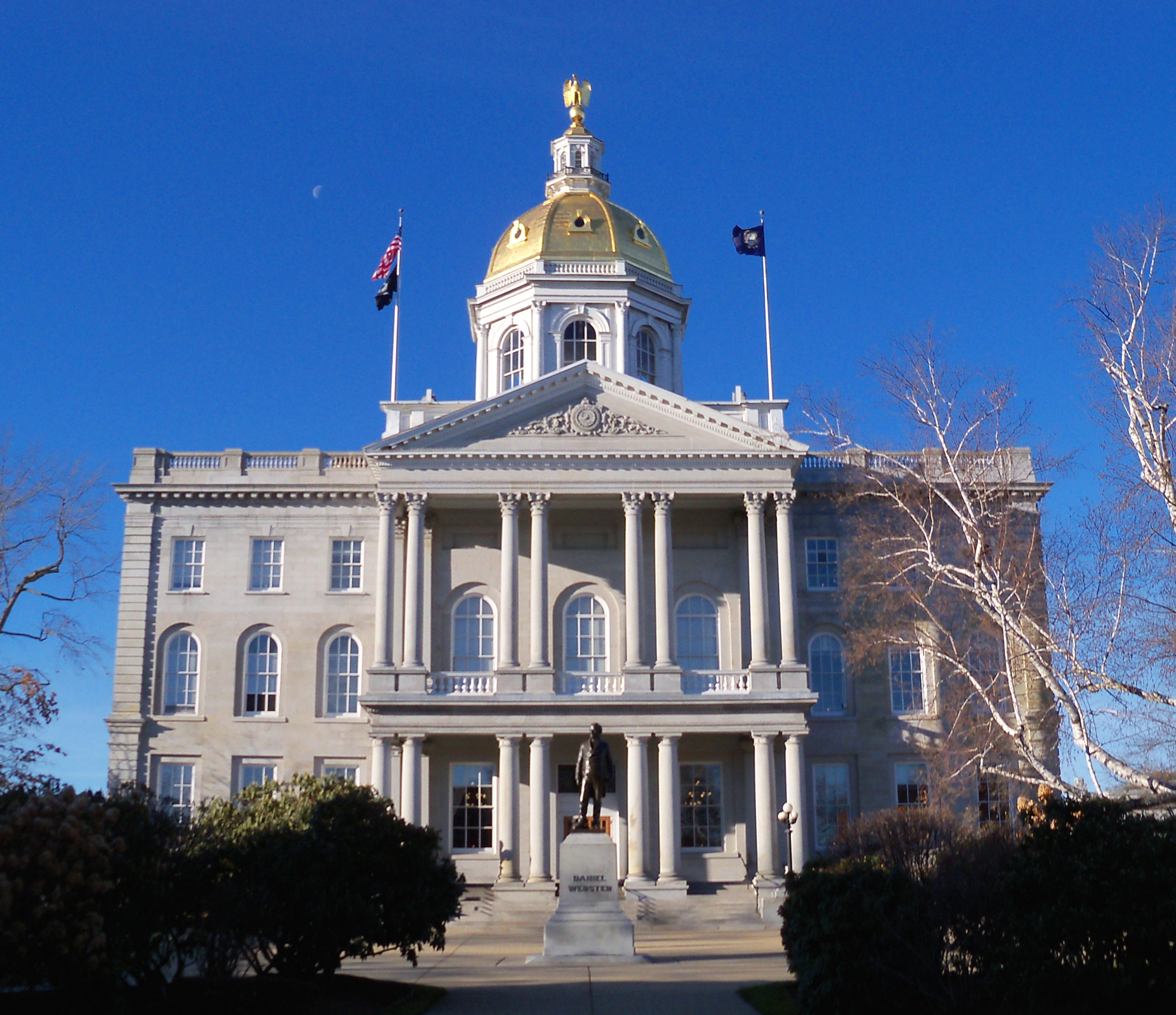
New Hampshire Governor Kelly Ayotte, a Republican, vetoed a bathroom bill on Friday—the third straight year a New Hampshire governor has killed the same legislation. Senate Bill 268 would have created exceptions to the state’s 2018 antidiscrimination law, allowing transgender people to be excluded from restrooms, locker rooms, jails, and other spaces that don’t match their sex at birth. The bill was virtually identical to HB 148, which Ayotte vetoed in July 2025, and to HB 396, which her predecessor Chris Sununu vetoed in 2024.
“I made it clear this issue needed to be addressed in a thoughtful, narrow way that protects the privacy, safety, and rights of all Granite Staters,” Ayotte said in a statement. “Unfortunately, there is minimal difference between Senate Bill 268 and the bill I vetoed last year, which Governor Sununu vetoed the year prior.” Sununu, in his own veto message, called the bill “contrary to New Hampshire’s Live Free or Die spirit” and said it “seeks to solve problems that have not presented themselves.”
The legislature failed to override Sununu’s veto in October 2024. They failed to override Ayotte’s in December 2025. Then they passed the same bill again.
Three identical bills. Three vetoes. Two Republican governors. A Fox News poll released the same week offers one explanation for why.
Fox’s poll—and what Fox won’t show you
The poll, conducted January 23–26 by Beacon Research (D) and Shaw & Company Research (R) and surveying 1,005 registered voters, found that voters trust Democrats over Republicans on transgender issues by 22 points. That is the largest partisan gap on any issue the poll tested—larger than healthcare (+21 Democrats), larger than vaccines (+16 Democrats), and larger than the Republican advantage on border security (+15). The generic congressional ballot in the same survey shows Democrats leading 52–46, which Fox notes is the highest Democratic number the network has ever recorded on that question.
Fox released extensive demographic crosstabs for every other issue in the survey—breakdowns by gender, race, age, education, party, ideology, geography, and 2024 vote choice. On transgender issues, the single largest partisan gap in the entire survey, the crosstabs are “held for future release.”
This is not new. In September 2024, weeks after the Trump campaign launched its “Kamala is for they/them” ad campaign, a Fox poll found Harris leading Trump by 16 points on who voters trust to handle transgender issues—including a 10-point lead among men, 19 points among independents, and 21 points among voters over 65. The campaign kept running the ads. Pollster Joey Teitelbaum told an audience at the National Press Club earlier this year that voters prefer Democratic positions on trans issues by a two-to-one margin, and that in every state her firm has polled, no more than 18 percent of voters say being transgender should be illegal.
In Virginia last November, Abigail Spanberger won the governorship by nearly 15 points after her Republican opponent, Winsome Earle-Sears, spent 57 percent of her advertising budget on anti-trans ads. Spanberger herself estimated roughly $30 million in anti-trans attack ads were run against her. She went on offense during the debate by calling out GOP policies directly, and won by a wider margin than any Virginia Democratic gubernatorial candidate in over a decade.
Republican governors who face general electorates can read these numbers. Ayotte’s veto messages are careful to endorse the premise—she has said there are “important and legitimate privacy and safety concerns raised by biological males using places such as female locker rooms”—while rejecting the execution as “overly broad and impractical to enforce.” She signed a ban on gender-affirming care for minors. She keeps vetoing bathroom bills.
Kansas
The same week Ayotte was preparing her third veto, Kansas Republicans were moving in the opposite direction. Two weeks after the state swore in Abi Boatman—a Democrat, Air Force veteran, and the second transgender woman to serve in the Kansas legislature—the House Judiciary Committee gutted an unrelated bill about compensated surety and replaced it with a bathroom ban. There was no public hearing on the bathroom provision and no fiscal note. A procedural maneuver called “gut and go” ensured the Senate never held a hearing at all. Both chambers passed it in a single day.
The Kansas bill goes further than most existing bathroom bans. It creates a private right of action—a bounty provision—allowing anyone to sue a trans person they encounter in a restroom for monetary damages. As Erin Reed first reported, the language is broad enough to extend beyond government buildings into private businesses, which would make Kansas the first state to effectively privatize bathroom enforcement through civil litigation. The bill also invalidates every trans Kansan’s driver’s license and birth certificate, forcing reissuance to match sex assigned at birth. It passed 87–36 in the House and 30–9 in the Senate. Both margins are veto-proof.
The bounty model addresses a specific problem that Republican governors have identified: bathroom bans, as written, are largely unenforceable. When Wyoming’s ban took effect last July, a trans woman walked into the women’s room at the State Capitol as a test. The highway patrol officer nearby said “OK.” She left. Nothing happened. Florida’s law actually criminalizes violations, but when a trans woman deliberately broke it at the Florida Capitol, prosecutors missed a filing deadline and the charges were dropped. Kansas reached for the model Texas used for abortion in SB 8: deputize private citizens to do the enforcing. If police won’t patrol bathrooms, the theory goes, people with a financial incentive might.
Boatman, who was selected to fill a vacant seat on January 8 and sworn in on January 12, sat through five and a half hours of debate about whether she should be allowed to use the bathroom. “I have sat here for five and a half hours and listened to this entire room debate my humanity and my ability to participate in the most basic functions of society,” she told her colleagues. “From the bottom of my heart, I hope none of you have to ever sit through something like that.”
Governor Laura Kelly is expected to veto the bill. Republicans have the votes to override her.
Who these laws actually hit
Trans people have been navigating hostile bathrooms their entire lives. These laws widen the target. Last August in Minnesota, an 18-year-old biracial lesbian named Gerika Mudra was followed into the women’s room at a Buffalo Wild Wings by a server who banged on her stall door and demanded she leave. Mudra ended up unzipping her hoodie to prove she had breasts. In Arizona, a Black woman named Kalaya Morton was confronted by sheriff’s deputies in a Walmart bathroom who told her she “looked like a man.” In Florida, a 6’4” woman was verbally assaulted by a man who assumed she was trans because of her height—then fired when she reported it.
None of these women were transgender. All of them were harassed because bathroom panic trained bystanders to treat gender nonconformity as a threat. Kansas’s bounty provision would add a financial reward.
Where this goes
New Hampshire shows the ceiling of this strategy. When a Republican governor has to face a general electorate, the polling math makes bathroom bills a liability—even for a governor who signed a ban on gender-affirming care for minors. Fox’s own data confirms the gap. Ayotte keeps vetoing these bills for the same reason Sununu did: the votes to override aren’t there, and the politics don’t support signing.
Kansas shows what happens when the math doesn’t matter—when a legislature holds veto-proof supermajorities and doesn’t need public opinion to govern. The bills don’t moderate. They escalate. Two hundred people submitted opposition testimony on the original ID bill, so Republicans added the bathroom ban after the testimony period closed and moved it through both chambers in a day.
Fox can bury the crosstabs. Kansas doesn’t need them. Abi Boatman was sworn in on January 12. The bathroom amendment was introduced on January 27. Her colleagues couldn’t wait a month.
Dem strategist should take this to heart, but they just keep doing the same thing.
I’d do the they/them ad with pictures of billionaires
Do any of these bills prevent transmen from using the men's room? If not, can that be declared unconstitutional due to gender discrimination? What would the legislature do if transmen began using the lady's room in noticeable numbers. Would not their constituents be more uncomfortable, particularly those who don't understand transmen exist as well.
The Huffington Post had an interesting article (with pictures) on this topic several years ago: https://www.huffpost.com/entry/what-does-passing-mean-within-the-transgender-community_b_593b85e9e4b014ae8c69e099