


On March 26, the International Olympic Committee announced that transgender women would be barred from women’s events at the Olympics, effective at the 2028 Los Angeles Games. The new policy reverses years of case-by-case eligibility review conducted in partnership with individual sports federations, replacing it with a mandatory SRY gene screening — a test for the gene that triggers male sex development, administered once via saliva or cheek swab. The IOC said the policy protects competitive fairness. It aligns with President Trump’s executive order on sports. No transgender women competed in the Paris 2024 Olympics.
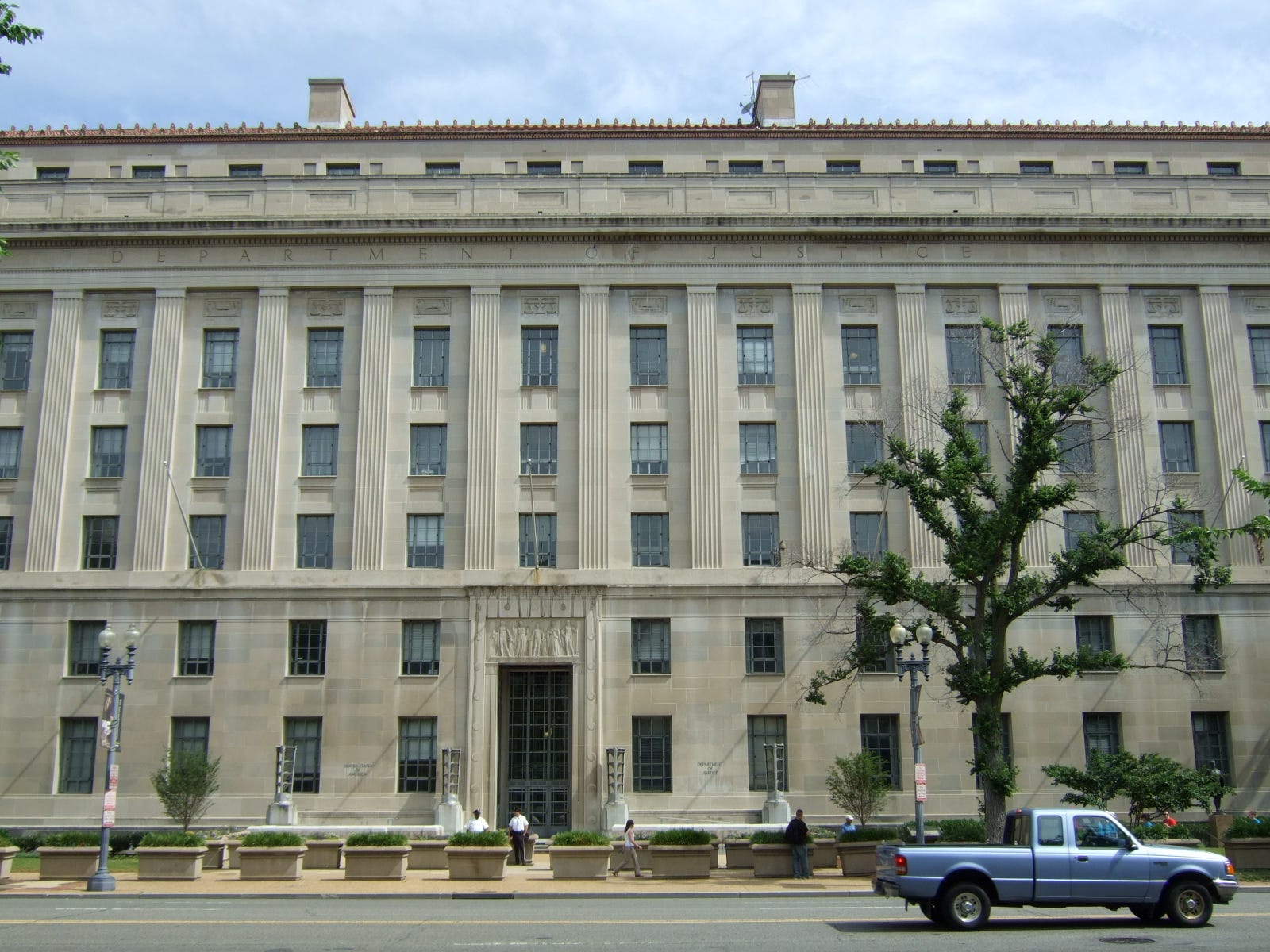
Four days later, the Department of Justice sued the Minnesota Department of Education and the Minnesota State High School League, alleging that the state’s policies allowing transgender girls to compete in girls’ sports violate Title IX — the first time the federal government has used a statute designed to expand women’s athletic opportunity as a tool to restrict transgender participation. The DOJ is asking for a permanent injunction barring trans girls from girls’ sports, sex-separated locker rooms and bathrooms, and a process to “correct past athletic records” of student athletes.
One week. Two institutions. The IOC made a governance decision about the Olympics. The DOJ filed a federal lawsuit about high school sports in Minnesota.
The advocacy response has been consistent. Human rights groups called the IOC ban “an astounding rollback on gender equality” that would “set women’s sport back 30 years.” LGBTQ organizations called it discriminatory and scientifically unfounded. The ACLU and HRC have framed the DOJ lawsuit as a violation of civil rights. UN experts described the genetic testing as “intrusive” and “privacy-violating.”
A New York Times-Ipsos poll in January 2025 found 79 percent of Americans believe transgender women should not compete in women’s sports — including 67 percent of Democrats. Gallup put the number at 69 percent in May 2025. Support for trans athletes playing on teams matching their gender identity has fallen 10 points among both Democrats and independents since 2021.
On this terrain, arguing the biology does not work. The claim that medical transition significantly reduces physiological advantages is a factual argument that requires voters to update a settled belief — one of the hardest persuasion tasks available. Arguments that open with “trans women are women” or frame the ban as a civil rights violation land with people who already agree and no one else. Calling the science “unfounded” when 79 percent of Americans — including two-thirds of your own party — have already made up their minds does not function as a rebuttal. It functions as a base communication to an audience that does not need persuading.
There is one frame that survives on this issue, and it requires a shift that most advocacy organizations have been unwilling to make.
The question is not whether trans women should compete. The question is who decides: sports governing bodies with scientists, physicians, and athletes at the table — or a presidential executive order and a DOJ lawsuit?
This frame works because it does not require voters to change their mind about transgender athletes. It asks a different question entirely. Should a Trump executive order tell the Olympics how to run its competitions? Should the DOJ sue a state education department over how a high school sports league handles eligibility? For voters who are skeptical of both Republican overreach and Democratic identity politics — the voters who decide competitive districts — this resolves the tension without requiring them to take a position on transgender identity at all.
The IOC ban is painful. It is also the system working — even badly. The IOC had years of case-by-case eligibility review, conducted with individual federations and informed by evolving science. It scrapped that process for a blanket gene test — aligned with a Trump executive order — to ban a class of athletes that had zero participants in the last Olympics. Advocates can and should criticize the decision. But the IOC acted within its institutional domain. That is what governance looks like, even when the outcome is wrong.
The DOJ lawsuit is something else entirely. The federal government is suing a state education department over how a high school sports league sets eligibility rules. The complaint asks the court to impose sex-separated locker rooms and to “correct past athletic records.” The DOJ is not adjudicating a fairness question with the help of sports scientists. It is taking a statute written to get women into sports and using it to dictate who gets kept out — in a state that didn’t ask for federal involvement. Minnesota Attorney General Keith Ellison called it “a sad attempt to get attention over something that’s already been in litigation for months.”
That distinction — between a sports body making a governance decision and the federal government suing to impose one — is the only ground that holds. It is not a comfortable argument. It concedes the IOC’s authority to make a call you disagree with. It does not affirm anyone’s identity or name anyone’s rights. It asks people to care about process when the substance is what hurts.
But it is the only argument that reaches voters who are not already on your side. And right now, on this issue, that is nearly everyone.
Seventy-nine percent of Americans — including two-thirds of Democrats — oppose trans women competing in women’s sports. No frame reverses those numbers. The goal is narrower: give persuadable voters a reason to object to the mechanism — the executive orders, the DOJ lawsuits, the federal government reaching into state high school sports — without requiring them to change their position on the underlying question.
The 2024 election showed what happens when the other side overplays this issue. Republicans spent $215 million on anti-trans ads. Four percent of voters said trans issues motivated their vote. In 2025, Virginia and New Jersey held gubernatorial races saturated with anti-trans coverage from Fox News and The Daily Signal. Both Democratic nominees won. The overreach argument works — but only if advocates are willing to make it about the overreach rather than about the identity.
The DOJ’s complaint against Minnesota asks the court to retroactively correct the athletic records of high school students. The federal government is suing to reach into a state’s record books and change the results of games already played by teenagers.
For what its worth, the recent polling by The Argument and the Searchlight Institute found opposition to trans participation in sports at around 60%, with more democrats in favor than not. That Ipsos poll from early last year was an outlier.
It should be noted that a few people will find out that they are intersex, they will be disqualified too