I used to think my rib cage was too big. If I leaned back, it felt like my ribs were more prominent than my breasts, a bone-deep asymmetry that I couldn’t stretch or diet or wish away. For a long time, I carried that sense of wrongness as a kind of evidence. My body was stubborn. My body was resisting me.
I wasn’t alone in that feeling. Rib surgery has become increasingly popular in recent years — an operation that literally saws through and reshapes the bones of your rib cage. It’s painful. It’s expensive. And for some people, it’s worth every penny. By all means, if that’s what you need to do to feel at home in your body, go for it. But here’s the thing I wish I had known sooner: sometimes, what feels like bone isn’t bone at all. Sometimes, what you’re really fighting is how you breathe.
Because I wasn’t broken. I was just breathing wrong.
Most of us are.
Somewhere along the line, we learn to pull air high into our chests. To expand our ribs outward and lift our shoulders slightly with every inhale. Shallow, tight, anxious breathing. And we call it normal.
It isn’t. It locks your body into tension, flares your rib cage, and makes your torso feel larger than it is. If you’re trans, that effect can be devastating. For years I thought it was proof that my rib cage was too wide, that I wasn’t built to look feminine, that I had lost some lottery of proportions. Really, it was just habit — a bad one.
And it’s a habit that’s especially common if you’ve developed an anterior pelvic tilt — the posture where your hips tip forward, your lower back arches, and your stomach pushes out. A lot of people get it from sitting too much, weak glutes, or tight hip flexors. Your pelvis rolls forward, your spine curves, and your rib cage naturally lifts and flares to balance it. It looks like bone structure, but really it’s compensation. Your breath follows your posture, and suddenly every inhale is expanding the wrong places.
Here’s how I changed it.
1. Wall breathing
Stand with your back against a wall, feet just far enough away that your lower spine presses gently flat. Place one hand on your ribs, the other low on your belly. Then breathe. Not into your chest, not into the sides of your ribs — but down, into your diaphragm. You’ll know it’s working when the hand on your stomach moves and the one on your ribs stays still.
It feels awkward at first, almost like you’re doing less. But over time, you start to notice how calm it makes you. You start to notice that your ribs don’t need to swell every time you fill your lungs.
2. Corset wearing
This isn’t about shrinking your waist or remaking your silhouette. Worn too much, corsets can actually weaken your muscles. But in small, intentional doses — an hour or two while doing chores around the house — they can teach your body what it feels like to keep your core engaged. For me, it was like training wheels. The corset reminded me not to push my ribs out with every breath, not to let my posture collapse.
3. Yoga
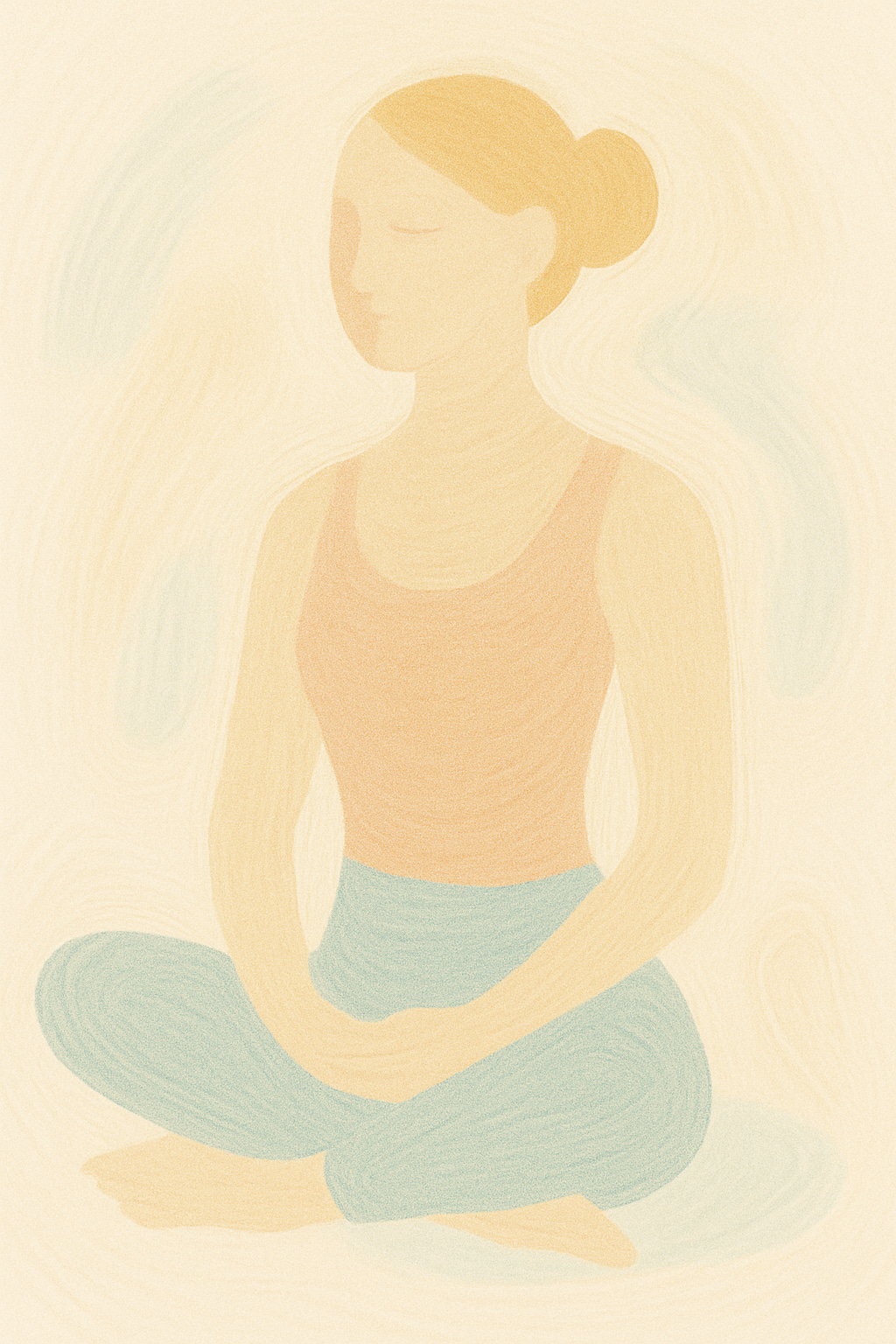
Breath and movement together. Flowing through poses where the inhale lifts you and the exhale grounds you. Over time, yoga reshaped my relationship with breath more than anything else. It built a stronger core, yes, but it also taught me to pay attention. When you’re moving slowly, holding a pose that challenges your balance or flexibility, shallow chest breathing doesn’t cut it. You need deeper, steadier air. And when you practice that over and over, it follows you off the mat.
Taken together, these practices didn’t just make me feel calmer — they actually changed my shape. My rib cage looks smaller than it used to, because it no longer flares outward with every breath. The bone itself hasn’t changed, but my posture has, my breathing has, and the effect is real.
I used to think I was at war with my body. That if I could just win the right fight — more hormones, more surgery, more discipline — I would finally arrive somewhere livable. What I’m learning now is that sometimes the battle isn’t with who you are, but with something you learned along the way. A posture. A breath. A story.
The rib cage I once hated feels different to me now. Not because it shrank through surgery, but because I taught my breath to stop forcing it wider than it needed to be.
And if you’re reading this, chances are you’re probably breathing wrong too.